What Dallas Homeowners Should Check After a Storm Hits
@branchandbrick
Where to Start After the Wind Dies Down
Storms in Dallas can move fast, leaving behind a tangle of broken branches, snapped trunks, and debris scattered across the yard. When the sky clears and it is safe to step outside, the first thing many homeowners feel is uncertainty. What needs attention right now? What can wait? A calm, methodical walk-around helps you spot the most urgent problems before they get worse. This guide walks through the key areas to inspect so you can plan your next steps and get things back in order.
Check the Roof and Gutters First
A heavy limb or a windblown branch can land on the roof without making a dramatic sound. From the ground, scan the roofline for visible damage: missing shingles, bent flashing, or dark spots that suggest water has found a way in. Gutters often collect leaf debris and small branches during a storm, and a clogged gutter can send water running down the exterior walls or into the foundation. If you see a split trunk or a large hanging limb directly above the house, that is a sign the structure may have taken a harder hit than it appears. Roof impact from falling tree parts sometimes goes unnoticed for days, so it pays to look closely.
Inspect Trees for Structural Damage
Not every tree that looks fine after a storm is actually safe. High winds put tremendous stress on trunks and branch unions, and a split trunk may not be obvious from a quick glance. Walk around each tree on your property, especially the larger ones near the house, driveway, or where children play. Look for cracks in the main trunk, bark that has peeled away, or branches that are hanging by a strip of wood and bark. A hanging limb that is still partly attached can fall without warning, especially in the next breeze. If you spot a branch that is twisted or lodged in another branch, it might need to be removed before it causes more damage. Fallen tree sections that are resting on the ground but still connected to the main trunk can also create tension that makes removal tricky.
Watch for Power Line Hazards
A tree limb that has come down on a power line is one of the most dangerous situations after a storm. The wire may look dead, but it could still be live. Never touch a branch that is touching or near a power line, and do not walk under it. The same rule applies to any wire that is dangling low or lying on the ground. Keep everyone, including pets, well away from the area. Report the problem to the utility company immediately. They have the equipment and training to handle live wires safely. Even if the branch is small, the risk of electrocution is real, and that job is never a DIY task.
Assess the Driveway and Walkways
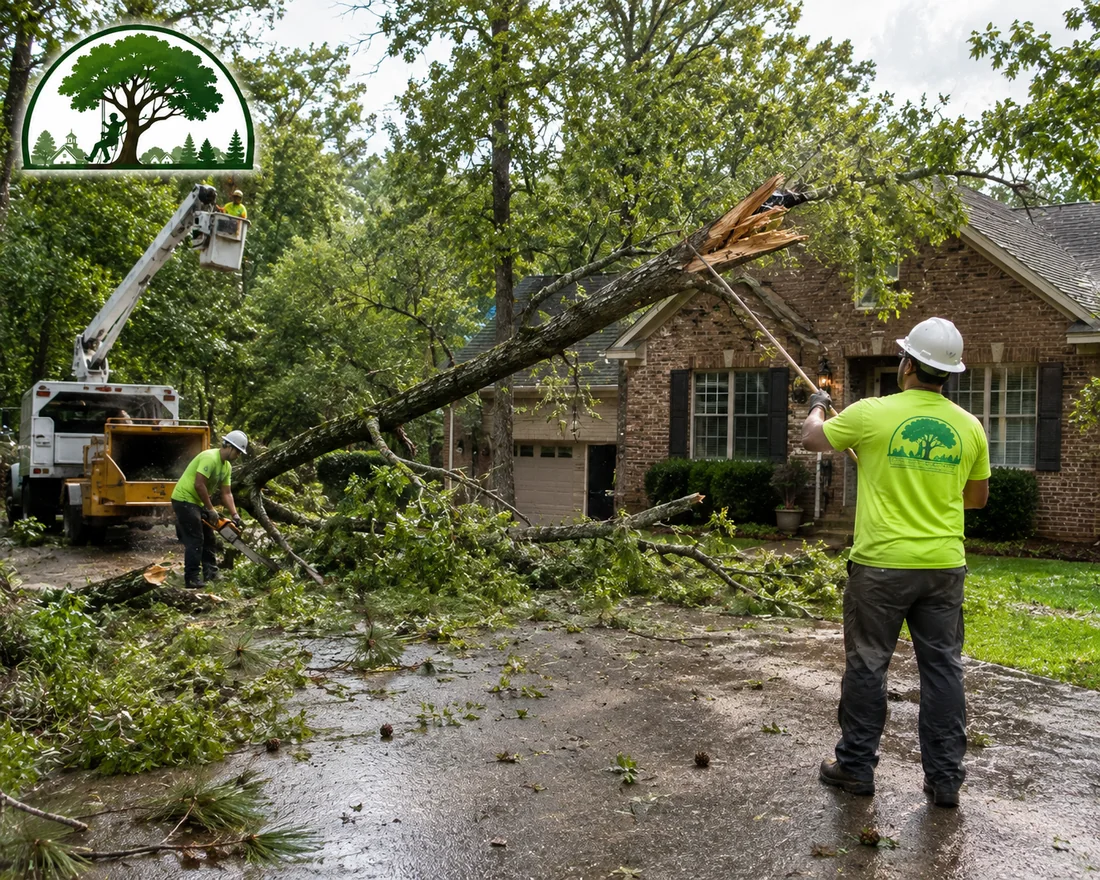
A blocked driveway can keep you from getting the car out in an emergency, and a path that is covered with debris is a tripping hazard. Look for fallen branches that are blocking the garage door or the main walkway to the street. If a large limb has come down across the driveway, do not try to drag it out yourself. The weight and awkward shape can cause injury, and the branch may be under tension that could release suddenly. Site stabilization sometimes means leaving the fallen material in place until a professional can cut it into manageable pieces safely. In the meantime, mark the area with a cone or a piece of bright tape so no one stumbles over it at night.
Look at the Fence and Shed
Storms do not just hit trees. They also damage fences, sheds, and other structures that sit near large trees. A leaning fence post may have been pushed by a falling branch, or the top rail may have snapped under the weight of debris. A shed roof that has taken a hit from a heavy limb may have a slow leak that shows up days later. Walk the property line and check for any structure that looks out of alignment or has visible cracks. Sometimes a tree that is still standing has a split trunk that is leaning toward a fence or a playset. That kind of damage needs attention before the next storm or a windy day makes it worse.
Prioritize What Needs Immediate Attention
After you have done a full walk-around, make a list of what you found and rank it by urgency. A hanging limb over the house or a split trunk near the driveway is more urgent than a few scattered twigs on the lawn. A fallen tree that is blocking the main entrance to your property should be dealt with before you worry about cleanup in the back corner of the yard. Keep in mind that emergency storm response services in your area are often stretched thin after a big storm, so calling early helps you get on the schedule sooner. If you have a tree that is leaning dangerously or a branch that is wedged against the house, that is the kind of situation where you want professional help as soon as possible.
What to Do With the Debris
Once the immediate hazards are addressed, you can start thinking about debris cleanup. Branches and leaves that are scattered across the lawn can be raked into piles, but if the debris includes large logs or heavy chunks of wood, moving them by hand is hard on the back. A lot of homeowners find it easier to separate the material by size: small twigs and leaves go into yard waste bags, while larger logs can be stacked for firewood or hauled away. If the debris is mixed with broken glass or metal from a damaged fence, wear thick gloves and long sleeves. Splinters and sharp edges are common after a storm, and a small cut can get infected quickly. Some tree services offer debris hauling as part of their storm response, so it is worth asking when you call for help.
Know When to Call a Professional
There is a line between what a homeowner can handle and what needs a trained crew. If a tree is still standing but has a large crack in the trunk, or if a limb is wedged high in the canopy, that is not a job for a ladder and a hand saw. The same goes for any tree that is leaning against another tree or touching the roof. Professional arborists have the equipment to work safely at height and the training to predict how a cut branch will fall. They also carry insurance, which protects you if something goes wrong. For Dallas homeowners who need help after a storm, reaching out to a trusted local service like treeserviceindallas.com can save time and reduce the risk of injury. A good company will send someone to assess the situation and give you a clear plan for what needs to be done.
Protect Your Property for the Next Storm
Once the immediate cleanup is finished, it is worth thinking about prevention. Trees that have lost large branches may be unbalanced, and the remaining branches could be more likely to snap in a future high wind. Pruning dead or weak limbs before storm season reduces the chance of damage. A tree that has a split trunk may need to be removed entirely if the crack goes deep into the main stem. Planting new trees away from the house and choosing species that are more wind-resistant can also make a difference over the long term. A little planning now can keep the next storm from causing as much trouble.
If you are unsure about the condition of a tree on your property, it never hurts to have a professional take a look. A qualified arborist can spot problems that are easy to miss, like internal decay or root damage that makes a tree unstable. In Dallas, where storms can come up fast, having a reliable contact for tree work gives you peace of mind. Whether you need a simple trim or a full removal after a storm, knowing who to call ahead of time makes the whole process smoother. A service like treeserviceindallas.com can help you take care of the heavy lifting so you can focus on getting your yard back to normal.
After a storm, the most important thing is to stay safe. Work slowly, wear sturdy shoes and gloves, and never take chances with a tree that looks unstable. A careful inspection now can prevent a small problem from turning into a big repair later.